


 Logan Burchett

1 min read
What-if analysis for startups: How to model multiple futures and impress investors
 Logan Burchett
You spent two months building the model. You know every assumption, every formula, every growth curve. You walk into the investor meeting feeling...
Financial modeling in Excel is where almost every founder starts. It's free, it's familiar, and it's good enough to get your early numbers off the ground.
Then your business grows. You raise a round, hire a few people, start running scenarios. That one clean spreadsheet quietly turns into five. Then fifteen. Then you're searching your inbox at 11pm trying to figure out which file of your model is actually the latest version.
That's spreadsheet sprawl. It's a predictable side effect of financial modeling in Excel, and it tends to creep in before founders notice how much it's costing them.
This post breaks down why it happens, what it's actually costing you, and how to fix it without rebuilding everything from scratch.
Key takeaways

It starts innocently enough. You open a blank spreadsheet, type in your revenue assumptions, add your expense lines, and end up with something that actually makes sense for where your business is right now. The formulas work. The layout is clean.
Then an investor asks for a scenario with 20% lower growth. You duplicate the file. A board meeting comes up and you want a cleaner version to present. Another copy. Your CFO wants to stress-test the headcount plan. Another one. Your co-founder pulls the model to run their own numbers and saves it under a slightly different name.
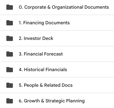
Before long, your financial modeling in Excel looks something like this:
Sound familiar? Nobody knows which file is current. Numbers don't match across versions. Updating one assumption means hunting down every copy and changing it by hand. Miss one and your models start contradicting each other. You won't catch it until you're mid-conversation with someone who matters.
This is spreadsheet sprawl. It's not a sign you're bad at Excel. It's what happens when a tool built for individual analysis gets stretched into a collaborative, living financial system it was never designed to be.

Excel is genuinely powerful. Plenty of finance professionals use it every day for sophisticated analysis. But there's a structural limitation that makes financial modeling in Excel particularly painful for growing startups: every new version is a new file.
When you want to test a new assumption, the path of least resistance is to duplicate the whole model and edit the copy. There's no native way to run and compare multiple scenarios within a single file without building a complex, fragile scenario-switching system from scratch.
Most founders don't have the time or the Excel expertise to build that. So they duplicate. And duplicate again. Each copy drifts from the others the moment anyone touches it. Six weeks later, there are four versions of the same model with four different answers to the question "how much runway do we have?"
When your numbers live across multiple files, every change has to be made manually in every version. You update a key hiring assumption and it's your job to remember every place that assumption lives. Change it in three files but forget the fourth, and now you have a model actively lying to you.
The problem isn't that founders are careless. Manual synchronization across files is genuinely hard to get right, especially when you're also running a company.
The moment you share a model with someone else, version control becomes a real problem. Your CFO makes edits on their copy. Your co-founder updates a different version. An advisor leaves comments on a file that's already two revisions old. There's no merge function in Excel. Someone is always working off stale data and usually doesn't know it.
Complex models also become fragile over time. A broken cell reference in your income statement can quietly corrupt your cash flow projections for months. Excel won't flag it. You'll find out when someone asks a question you can't confidently answer.

Spreadsheet sprawl doesn't announce itself as a crisis. It accumulates quietly, and most founders absorb the cost without ever adding it up.
Think about the last time you needed to update your model before a meeting. How long did it take to find the right file? How long to make the same change in multiple places? How long to double-check that your numbers were actually consistent?
For most founders, this eats several hours a week. It's maintenance, not strategic work. And it compounds every time your model gets more complex, your team gets bigger, or your investor reporting gets more frequent.
The deeper problem isn't the wasted time. It's the decisions that get made on numbers that were never quite right.
When you're working from a model that might be outdated, you lose confidence in your own data. You start hedging in conversations because you're not sure which number to trust. You make calls on hiring, spending, or runway based on projections that haven't been properly updated. Over time, that erodes your grip on the business, which is exactly the opposite of what a financial model is supposed to do.
You're in a pitch meeting. An investor asks you to walk through your unit economics. You pull up your model and the numbers don't quite match the deck you sent them last week. You explain that you updated some assumptions. They nod, but the question they're now asking themselves is whether you have a handle on your numbers.
Or you're presenting to your board and two slides reference different burn rates because they were built from different versions of the model. These moments are recoverable, but they cost you credibility you worked hard to build. A broken finance tech stack creates these moments regularly.
Investors are backing your judgment as much as your projections. Showing up with clean, consistent, current numbers signals something specific about how you run your business.

The answer isn't to become an Excel power user or to hire someone to wrangle your spreadsheets. Use a tool built for what you're actually trying to do.
Dedicated FP&A platforms like Forecastr are designed for the kind of ongoing, collaborative financial modeling that growing startups need. Everything lives in one place and stays in sync, so the version control problem goes away entirely.
In a centralized platform, there's one model. One set of assumptions. One place where updates happen. Change your revenue growth rate and it flows through your cash flow, your headcount plan, your runway projection, and every report that references it. Automatically. No manual reconciliation, no hunting through files, no risk of missing a copy.
That sounds simple, but the effect on your decision-making is real. When you trust your numbers, you make faster and more confident calls. When you're not sure which file is current, you second-guess everything.
A good finance tech stack makes scenario planning straightforward, because scenario planning is how founders actually use their models. What happens if you close two fewer deals this quarter? What if you delay hiring until Q3? What if churn ticks up by two points?
With a dedicated platform, you run those scenarios in one place and flip between them without creating new files. You can walk investors or your board through multiple cases from a single model with consistent underlying data. That's where the upgrade pays off most visibly, especially in fundraising conversations.
One of the most time-consuming parts of financial modeling in Excel is keeping your actuals current. You export a CSV from QuickBooks, paste it into the model, reformat the columns, check for errors, and hope nothing breaks. Then you do it again next month.
Platforms like Forecastr connect directly to QuickBooks, Xero, and other accounting tools so your model updates automatically as transactions come in. Your actuals stay current without manual exports. Your budget-versus-actuals view is always fresh.
When multiple people need to work in your model, a dedicated platform handles that cleanly. Everyone works in the same place. Changes are tracked. You always know what's current and who changed what. No more "I thought you were using the other file."
And if you still need to share a clean Excel file with an investor, an auditor, or a board member who prefers it, you can export one whenever you want. You keep the flexibility without living in the chaos.

Spreadsheet sprawl is a solvable problem. Founders who stay stuck in it tend to underestimate what it's costing them until it's already created a real mess.
A cleaner finance tech stack means faster decisions, more confident investor conversations, and a lot less time spent managing files. When your numbers are reliable and your model is always current, you walk into every room knowing exactly where you stand. Schedule a demo and we'll show you how much cleaner financial modeling can be.

Subscribe on YouTube to get notified when we post new content
Get notified about new events, free resources, and fresh content

1 min read
You spent two months building the model. You know every assumption, every formula, every growth curve. You walk into the investor meeting feeling...

1 min read
You’ve got the idea, you’re starting a business, and you have a few early supporters. It all may feel great. But when an investor asks for your...

1 min read
You just wrapped up your funding round, and the wire cleared. It’s time to celebrate, but what’s the financial model that helped get you here? Don’t...
 Mohammad Ouhadi